
Showing posts with label Vanguard News. Show all posts
In Nigeria, new Chinese-built train takes the strain

In Nigeria, new Chinese-built train takes the strain

In Nigeria, new Chinese-built train takes the strain
Kaduna-Abuja train
Kaduna-Abuja train

The train travels at a stately speed, taking more than two and a half hours to traverse little more than 150 kilometres (90 miles) of countryside in southern Nigeria.

But the fledgling service is developing a fanclub among travellers exhausted by the country’s notoriously choked, chaotic and dangerous roads.

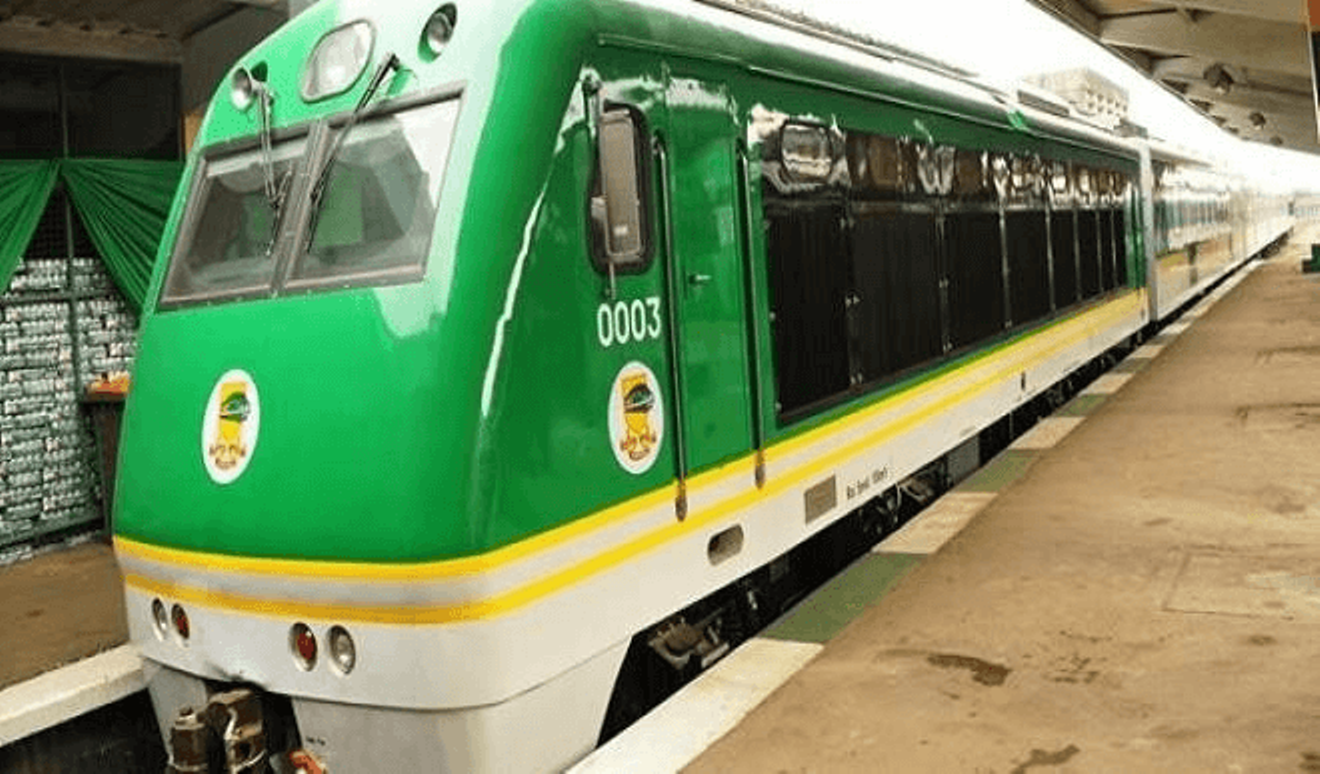
The $1.6-billion (1.34-billion-euro) Chinese-built link between Nigeria’s economic hub Lagos and Ibadan, capital of the southwest region, began partial operations last December.

It counts Nobel laureate Wole Soyinka among its supporters.

“This is my sixth trip,” the playwright told AFP, as the whistle blew for the 156-kilometre (97-mile) journey.

He recalled the 1960s and ’70s when the train was king.

“We grew up to see a working railway in Nigeria,” said Soyinka, who won the 1986 Nobel prize for literature, the first Nigerian to be so honoured.

In those days, the railway was the main means of moving people and goods around the country until, as elsewhere, it became the country cousin to the car and began to decline.

[ALSO READ] Marginal fields: FG sets $500m target as buyers pay 50% of Signature bonus — Minister

One hour into the journey, the train made a five-minute stop in Abeokuta, where Soyinka has a country home — the station there is named after him.

He and a few other passengers disembarked and a handful of commuters boarded for the rest of the trip to Ibadan.

Nigeria, Africa’s most populous nation of 200 million people, is pushing ahead with reviving its railways, despite years of frustrating delays.

In July 2016, President Muhammadu Buhari inaugurated a 187-kilometre line between the northern city of Kaduna and the capital Abuja.

Vice President Yemi Osinbajo flagged off construction of the Lagos-Ibadan line in March 2017 when he was acting president.

– Train takes the strain –
Carriages are equipped with overhead 10-inch (25-centimetre) television screens and window seats have electric sockets and two USB ports, while the toilets are clean and well-equipped and the crew is attentive.

In business class, the cosy train seats are in rows of four split by a spacious aisle, with overhead luggage bins.

“The train is comfortable, reliable and safer,” said Otonye Ayodele, a university lecturer.

“It saves time and prevents one from the agony of going through the notorious Lagos-Ibadan gridlock,” she said, pulling a laptop from her bag.

Soyinka mused that the new line could also be “pivotal” in easing Nigeria’s chronic security problems.

Cattle could be moved to pasture by rail as a way to prevent violence between farmers and semi-nomadic herders, which is often sparked when animals trample on crops, he suggested.

Lagos banker and first-time rider Adebimpe Kareem enthused: “It’s like being on a London or Paris train.”

Kolawole Akinbola, who had just arrived from Germany, was also full of praise.

“This train is spacious, air-conditioned, comfortable. I hope Nigeria will sustain the quality.”

But many criticise its speed — just 50 kilometres (30 miles) per hour — which means it takes two hours, 40 minutes for the trip.

However, this compares favourably with the car. Going by road in theory should take a maximum of an hour and a half, but the trip often takes six hours because of gridlock and construction work.

[ALSO READ] Insecurity threatens 2023 elections, Ortom tells Buhari

Others grouse about the train’s high fares in a country where most people live on less than $2 a day, lack of an on-board restaurant and the insufficiency of just a single service per day.

– Goal of 160 kph —
“We are still operating skeletal services because of ongoing construction works at the tracks and stations,” said Nigerian Railway Corporation (NRC) official Jerry Oche.

When fully operational, he said, the train’s frequency will increase — and its speed will rise to 160 kph.

He said the train would continue to limit ridership to far below its capacity of around 600 in view of the Covid pandemic.

The first class fare is 6,000 naira ($16 / 13 euros), business class 5,000 naira and economy 2,500 naira — tariffs that Oche argued were “reasonable and fair.”

Muda Yusuf, head of Lagos Chamber of Commerce and Industry, hoped the line, built by the China Civil Engineering Construction Corporation (CCECC), would boost trade and reduce traffic jams and highway crime.

“It will also lead to massive investment in property and real estate around its corridors,” he predicted.

Locals have already spoken of rising property costs in and around Moniya, the district in Ibadan where the station is located.

Yusuf said extending the line to Lagos seaport would help decongest the facility and reduce the cost of haulage.

But, he said, rail projects were still facing delays because of lack of funds and insecurity.

[AFP]

Vanguard News Nigeria

The post In Nigeria, new Chinese-built train takes the strain appeared first on Vanguard News.

Isusu, a traditional savings and loans scheme boosting petty businesses in Igboland

Isusu, a traditional savings and loans scheme boosting petty businesses in Igboland

Isusu, a traditional savings and loans scheme boosting petty businesses in Igboland

Isusu, a traditional savings and loans scheme boosting petty businesses in Igboland

By Anayo Okoli, Vincent Ujumadu, Chidi Nkwopara, Chimaobi Nwaiwu, Ugochukwu Alaribe, Peter Okutu, Chinedu Adonu, Ikechukwu Odu & Steve Oko

”ISUSU” (meaning small, small), a savings and loans scheme in Igboland, has been of immense benefit to petty and medium size business operators.

It has transformed some of these petty traders to big time business operators. It helps them build up capital in their businesses. It is popular in Igboland for capital formation. It is a good alternative for borrowing from financial institutions. The modalities are not too rigid.

What an interested person needs to do is to make up his mind to obey the conditions stipulated in the scheme and before long, he saves enough capital to embark on any business he desires.

Traders who want to grow their business can, instead of borrowing from financial institutions with their attendant strict conditions, start saving to raise adequate capital through Isusu. Even people who want to build houses but do not have enough money to start with, can join isusu club to enable them achieve target savings to enable them accomplish their desire.

However, Isusu scheme is principally based on trust. Those engaged in it understand the high risk involved.

Mrs. Emilia Nwosu, a petty trader in Awka said she has consistently been involved in  isusu for the past 20 years. She explained that one must know the background of the operator before committing his or her money with the person.

“When I started my petty trading business, it was very difficult for me to save as most of my profit went into housekeeping. I knew that sooner than later when my children would start school, my husband and I might find it difficult to cope with payment of school fees.

“So I joined one  isusu  club in the market and was contributing N500 daily although it was affecting us in the house as we had to reduce some of the items we were consuming. I persevered and was making the contribution religiously and at the end of every year, I would have saved enough money to pay for the children’s school fees”, Mrs. Nwosu said.

Another type of  isusu  is the one where a number of contributors decide to raise money for their members. They contribute an agreed amount monthly which is given to a member on rotational basis to enable the beneficiary to embark on whatever project he has targeted for himself. It is even on record that many wealthy individuals engage in this type of  isusu.

Mr. Obiadi Dike, a businessman narrated how he used the money he saved from isusu to build a house for his mother. “We were ten trusted friends making the contribution and the minimum each person contributed every month was N100, 000. I took two slots and luckily for me, I picked the first number during the ballot, which gave me N2 million. The amount went far in the house project and at the end of the cycle, I got another N2 million and completed the house for my mother in the village.

“If not for the  isusu, the house project would have affected my business or I might not even have contemplated building the house in the first place.”

However,  isusu  business is not always a palatable story to tell. A civil servant, Mrs. Gloria Okonkwo narrated a story of how she lost N60, 000 to an  isusu  operator. She said: “This lady was always coming to the office on the payday for my monthly contribution of N5000 which was to mature by December of the year. Before the closure of the office for the Christmas when she was supposed to pay all the contributors, she was nowhere to be found. Up till now, she has not showed up and her telephone line had since gone off.

“We traced her home only to be told that she had since relocated from Awka. It was indeed a bleak Christmas for my family and I will never get involved in  isusu  again in my life.”

For Fidelis Dim, a curtain and footman dealer based in Umuahia Abia State, isusu  has tremendously impacted the Igbo economy as it serves as one of the fastest ways to raise quick capital for low income earners. According to Dim, many middle class Igbo traders and entrepreneurs today at one time or the other, raised their initial capital through  isusu  contributions.

The Uga, Anambra State-born trader, said  isusu  helps like-minds raise soft capital which members of the group access easily either to help boost their trade or for other purposes. He said that he was actively involved in the practice but currently his wife is much deep into it.

READ ALSO: Uproar over alleged ostracization in Ishi-Ozalla, Enugu community

“I can tell you that  isusu  is nice provided you are able to identify sincere and honest people that make up members of the thrift society.It helps people especially those without god-fathers to raise quick capital. You contribute small money depending on your capacity, and when it gets to your turn to collect, you receive something bulky.

“I did it before and my wife is still in it. It helps us to solve a lot of financial needs especially during Christmas period”.

He however advised people willing to be involved in the practice to ensure they ascertain the financial strength of other members of the group to avoid a member defaulting. According to him, defaulting members negatively affect other members of the group who are yet to receive their contribution before any break in chain occurs.

“That is why members provide guarantors before receiving loans from the group so that in the event of any default the surety will be held responsible”.

Dim explained that one person may be involved in many  isusu  groups and may take loan he collects in one group to service the loan he gets in other groups, thus, defaulting in repayment.

Besides such cases of defaulting members, isusu generally, “is a very wonderful idea.
Corroborating Dim’s account, a tailor, Mr. Mba Ude from Afikpo in Ebonyi State but based in Umuahia, said he raised the capital to buy sewing machines and rent his shop through  isusu  contributions.

The Alvan Ikokwu graduate of Education/Political Science said that he trained himself in school through  isusu  contributions. He strongly recommended the scheme but cautioned that one has to be sure of the integrity and financial capacity of other members of the group to avoid some members defaulting.

“Isusu  is very good. It helps members to set goals and targets for themselves. You can target a particular project you want to execute for the year and make you contributions towards it. Once it is your turn to collect your contributions, you go and deploy it to the project immediately.

“It has helped me a lot. I started  isusu  many years ago and I credit my success story to it. I trained myself in school with  isusu  contributions. I also used it to buy machines and rent this shop. I currently belong to three different  isusu  groups. Each year I target one major project I want to execute with the contributions, and once it is my turn to collect, I execute it immediately.

“Sometimes I swap turns with other members if I have a pressing need but I usually like collecting last so I can use it for projects. So, isusu  is a nice thing but one has to be careful about the sincerity of other members. That’s why I choose the groups I belong, not just every group to avoid disappointment.”

A Mechanic who operates at the Abakaliki Mechanic Village, Mr. ThankGod Njoku said that the  isusu  scheme has helped him develop the culture of savings and prudent management of every available financial resource at his disposal.

“The contribution we do is very helpful. If there is nothing like  isusu  existing, I am not sure I can establish or expand my business. With the  isusu,  I have begun early this year, I believe that at the end of the year, I will be able to start selling some motor parts in my shop instead of depending on other people.

“The scheme helps in the expansion of businesses and helps one develop the culture of savings. With the way and manner money comes to us, if you don’t save, it will be difficult to carry out any other forms of business”, Njoku said.

For a Civil servant, Mrs. Chinwe Chukwudi, who complained about the merger salary she gets monthly, the scheme has given her the courage and financial stability to invest in other areas of business, instead of relying on her poor monthly pay.

“The salary we are paid is very merger and so  isusu  has helped us to carryout projects that ordinarily we wouldn’t have been able to do. What we do is on a monthly basis, until the end of the year.

“No matter how small you contribute, make sure it is steady and definitely you will reap from it if you are disciplined, determined and dedicated to the terms and conditions of the scheme.

“I am planning to buy a car before the end of this year and I believe that with this scheme which has helped Igbo in their businesses, my project will surely be achieved.

The reason persons don’t go into it is because, one’s earnings come gradually. Also, if those involved are not committed and faithful to the agreement governing the scheme, it could lead to the disruption of the entire process, monetary loss and sometimes chaos”.

In his contribution, a barman in Nsukka Local Government Area of Enugu State, Cajetan Agbo, said the culture of saving bit by bit has helped to start and sustain many businesses flourishing in Igboland today.

Agbo explained that many Igbo businessmen who are today, owners of big businesses started through such saving scheme. He said that it helps in controlling extravagant spending because those involved in the saving culture usually save something on a daily basis, leaving them with the cash to solve only basic needs.

“Some people spend unnecessarily because they have money at their disposal.

Different saving schemes have helped Ndigbo to build their businesses. For instance, a foodstuffs retailer who wants to go into wholesale may start saving when a particular foodstuff he is interested in is scarce. He can then use what he has saved to buy reasonable quantity of the foodstuff when it is abundant in the market. That way, he can become a wholesaler of the foodstuff.

“Many people have used the method to grow their businesses and even start businesses for their younger ones,” he explained.

But for an Onitsah based industrialist, Chief Johnson Okolo,  isusu  savings and loan scheme, is necessitated by ignorance by the operators and the people that patronize them.

“Banks are there for the people to save money but people out of ignorance patronize them and they are creating more trouble for them than solving their financial problems because 80% of the people who transact the business with them end up getting negative stories about what happened to their money.

“It is poor people that manage the thing, and when they collect the money and have one problem or the other, they use the money to solve their problems leaving the depositors to cry and complain for mismanagement of their money.”

“Sometimes when they use depositors’ money to solve one problem or the other, they are not able to repay the money because they have no means of repayment; so it is ignorance of our people that make them to patronize them. I think our people should do away with that kind of saving scheme; banks are there for them to do such savings.

“Isusu  savings and loans business is not  helping Igbo in growing their businesses, rather it impoverishes them more; after all  they do not give interest, rather they collect from your money instead of giving you interest, and the money they remove is more that the amount the banks collects. For me one needs only a small commitment to go to bank to save instead of patronizing them.

“There is more danger, more disappointments and disadvantages in  isusu  business transaction than gain or advantages. We have heard cases where the collectors and managers made away with people’s money. Have you not heard many that collected millions of naira belonging to their customers and ran out of the country, it has been happening here in Onitsha and other place?

“Some of the operators are dubious, they make up their mind from the day one that they will intentionally collect the money and dubiously embezzle it, and they enter into the business to achieve that aim, and once they get enough, they run out of the country with people’s money. Many of them have collected people’s money and travelled out of the country. 50% of them end up duping and running away with people’s money. There is a lot of risk in transacting that business. It is not helping out people in any way, and therefore should be discouraged”, Okolo said.

Isusu was and still remains a system of raising money collectively, for specified individual targets like building houses, starting small retail businesses, payment of school fees and other personal issues.

In Umuoyima village, Owerri Nchi Ise, 82-year old Dorathy Njoku, explained the practice of  isusu  thus.”In the years of yore, a few like minds, would come together and agree to make specified contributions weekly, biweekly or monthly, to help ourselves in achieving individual goals.

“Nobody knows how or when the process started in Umuoyima, Owerri. I grew up to meet the practice and I can conveniently say that it helped people a lot, particularly peasant farmers, petite traders, as well as intending house owners.

“The  isusu  practice was not limited to only cash. During the farming season for instance, a few people may decide to exchange their labour, instead of asking for payment in cash. With this, jobs are collectively done and very fast too.”

According to Madam Njoku with glee, the practice helped their parents in different ways, including the education of children. “I urge Ndigbo to keep the practice alive. It helped our forefathers and it will still help our generations yet unborn”.

A trader at the Eke Ukwu market, Chief Emma Ibeh, who deals on food ingredients, said that he survived from a saving scheme like cooperative society because he had in the group people of like minds and secondly you have to pray to God to guide your activities.

He said though it has helped him grow his business but not without some issues where some members collected money and refused to repay thereby making it difficult to achieve the purpose for which it was set up.

“This, my business was revived by the money I got from contribution group. When former Governor Rochas Okorocha, demolished Eke Ukwu market, all means of livelihood was destroyed. I was forced back to level 0. What I did was to collect money from our contribution and I used it to start afresh. I even entered into other business. So it has helped me to stand back to my feet in business.

“Not just I, a lot of people my friends, also collected money and we were happy that it did not take much time for us to come back alive if not what would I have done.”

However, Ibeh noted that “the disadvantage of it is that when you do it with the wrong people; they collect money and will not return it back such behavior kills the vision of the group and discourages members. We had to arrest one of our members for defaulting; we took him the police station and dumped him there until he signed an undertaking on how to repay us.”

A former banker, Mr. Vincent Ihesinulo, said that  isusu  has helped Igbo traders and apprentices to amass capital to promote their business.

Ihesinulo explained that the  isusu  system helps the struggling Igbo trader, apprentice and other small business operators to make daily, weekly or monthly contributions from where they can make some withdrawals to start or support their businesses.

He further explained that the contribution made by the trader or apprentice serves as a form of collateral for them when they want to make withdrawals.

The former banker further stated that the major advantage of the isusu system is that it is more convenient for the traders and apprentices who may not have chance to visit the bank to make deposits.

“Isusu system helps the Igbo trader or apprentice to amass funds for their businesses. The trader or apprentice makes daily, weekly and monthly contributions from where he may make withdrawals to support their businesses. Both the apprentices and traders have been able mass up trading capital through this means; making contributions at the agreed periods. The isusu operators and agents usually come to markets, offices and shops to collect cash contributions from the traders, apprentices and other subscribers.

“Traders and apprentices hardly have the time to visit banks to make deposits. It is more convenient for the traders and apprentices for the agents and operators of the  isusu system to visit the markets, shops and offices to collect their contribution.

“There is also minimal documentation, which makes it convenient for those who see banking as involving a lot of “grammar” and documentation.  Isusu  also helps to promote fiscal discipline among the traders, apprentices and other subscribers, as they are obliged to make the periodic contributions irrespective of sales dynamics and at the cost personal comfort. Through the  isusu  system, you can save huge sums of money to meet your business and other needs. Save for the forfeiture of a minimal percentage of the contributions,  there are no bank charges in the  isusu  system.”

However, Ihesinulo noted that there are huge risks involved in the  isusu  system, as deposit can be lost to a fraudulent agent.

“There are many disadvantages in the  isusu  system. Most apprentices and traders have lost their contributions to fraudulent  isusu  operators. Again, there is no serious agreement binding the agent  with the traders and apprentices who make contributions. Banks are known to pay interests on untouched funds in savings accounts but this is not applicable in the  isusu  system.

A welder at Mbanugo Street, Coal Camp, Enugu North local government area in Enugu state, Mr. Ifeanyi Oyiga said that  isusu  contribution helped him save money while learning welding trade.

Oyiga said that he bought his welding equipments with the first money he saved as an apprentice, adding that his first car was also bought with  isusu  money.

Expressing satisfaction with  isusu,  Oyiga also said that it helped him to reduce excess expenses to ensure that he pays daily contribution.

“Isusu is a very essential means of savings that have helped and is still helping Ndigbo to grow business. It has contributed immensely in growing capital and reducing excess expenses. An apprentice who is doing a daily contribution will not like to eat two times to make sure he saves money for contribution.

“I will use myself as an example; when I was learning welding, I was doing contribution and at the end of my one year and six months period, I save N500,000 which helped me to buy welding equipment. When I started my own business, I continued the contribution and with it, I have done a lot. I did contribution for two years to buy my first car”.

Vanguard News Nigeria

The post Isusu, a traditional savings and loans scheme boosting petty businesses in Igboland appeared first on Vanguard News.

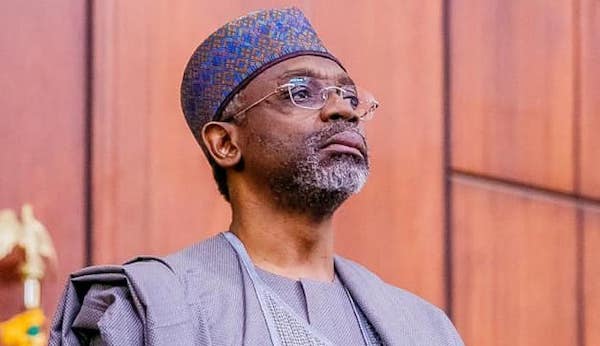
Gbajabiamila accepts Tivs petition

Gbajabiamila accepts Tivs petition

Nigeria’s health sector will emerge stronger from COVID-19 — Gbajabiamila…as Gbillah commends Speaker for his intervention

…appeals to Nigerians in diaspora to rescind decision on withholding remittances

By Levinus Nwabughiogu

Speaker, House of Representatives has accepted the petition of the Tiv people from Benue State resident in the United States of America.

It will be recalled that the Deputy Speaker, Idris Wase penultimate week rejected the petition, saying Nigerians in diaspora were not in the right standing to make a petition to the House.

The rejection had however attraction widespread condemnations from Nigerians all over the world.

But represented by Hon. Mark Gbillah representing Gwer East West Federal Constituency of Benue State at Tuesday plenary, Gbajabiamila who presided over the plenary accepted the petition.

He said that the House of Representatives cannot discriminate against any Nigerian wherever they may be in any part of the world.

Gbajabiamila also that his deputy has been championing the cause of the Nigerians in diaspora. “I believe this is the same petition that has been causing a lot of misunderstanding. “The misunderstanding came from the issue of signature.

“Having cleared that misunderstanding, please, go ahead and lay your petition to be given proper attention. “Thank Hon Mark Gbillah. Thank you for your patience”, Gbajabiamila said.

Speaking to Journalists after the plenary, Gbillah commended the Speaker for his intervention.

He appealed to diaspora Nigerians to sheathe their swords and rescind their earlier threat of withholding their home remittances in the light of the acceptance of the petition.

READ ALSO: #EndSARS protest: Killings, vandalism unnecessary, says philanthropist

“The Speaker sat today as you were aware and obviously with somebody of his vast legislative experience, he also understood clearly that there was a fall par in the event that unfortunately occured on March 10, 2021 because the rules clearly state that a petition stands laid. So, let me commend the Speaker,  Nigerians in diaspora were watching and I want to tell them all very clearly that Mr. Speaker has made a statement today addressing that issue finally about the fact they have inalienable rights to present any petition on any issue before their legislature regardless of whether they are dual citizens or not. We do not require registration with CAC as Nigerians to associate or approach our parliament.

“These rights are enshrined in section 40 of our constitution. So, I am happy this issue has been put behind us and I am hoping that in the same vein, the media will make Nigerians in diaspora, home and all over the world that this honorable Households diasporas  in high esteem and upholds the constitutional rights of every Nigerian regardless of where they are.

“I commend the Speaker for being statesman and upholding the tenets of our constitution and rules.

“I would also like to first all commend Nigerians in diaspora for rising up to defend their constitutional rights. It is their privilege to do so. I appreciate their rallying around us, the Tiv people and the Tiv Association in America who brought up this petition in the first place. I don’t want us to lose focus on the crux of the petition itself.

“I want to appeal to them in the light of the final submission of the petition and Mr. Speaker’s confirmation of the commitment of the House in the furtherance of the issue of our people in diaspora to sheathe their swords.

“I am sure the deputy speaker himself is contrite about the who matter even though he has not formally apologized which I will appeal to him to do, but I want to appeal more so to my compatriots in diaspora to sheathe swords and rescind their earlier ultimatum with regards to remittances”, Gbillah said.

The post Gbajabiamila accepts Tivs petition appeared first on Vanguard News.

Uproar over alleged ostracization in Ishi-Ozalla, Enugu community

Uproar over alleged ostracization in Ishi-Ozalla, Enugu community

Uproar over alleged ostracization in Ishi-Ozalla, Enugu community

Uproar over alleged ostracization in Ishi-Ozalla, Enugu community

By Dennis Agbo

A resurgence of Ohu-caste system, an ancient social discrimination stigma that makes one less inferior, has once more thrown into turmoil the Ishi-Ozalla community in Nkanu west local government area of Enugu State.

The abolition of ‘Ohu’ practice in the entire Ozalla federated town was celebrated on September 1, 2018 with prominent Nkanu indigenes such as Senator Jim Nwobodo, Prof Bath Nnaji, Mr. Frank Nweke jnr and Bishop Emmanuel Chukwuma in attendance.

But last week, the Edeaniagu kindred, a part of Ishi-Ozalla autonomous community marched in protest to both the Enugu State Government House and the state House of Assembly, alleging ostracization from the community.

The President General of Ishi-Ozalla Town union, Chief Obinna Nveneh, however said that the allegation was not true; stating that issues started with self-crowning as king by one of the members of the Edeanigu kindred, Don Sylvester Nweke, which he said was repugnant to community as due process was not followed.

The Edeaniagu people however insisted that they have been excluded, excommunicated, banished and out rightly ostracized from their community.

One of their leaders, Mrs. Munachi Okoye said that some leaders of Ishi-Ozalla have sworn not to allow peace reign in the community, despite Governor Ifeanyi Ugwuanyi’s intervention on the matter.

She said: “The latest that made us see the governor was the ostracization of a group of people in my community. We have not had a king in the community for nine years and anybody that comes out to indicate interest in the kingship will be blackmailed, frustrated and use government apparatus, police, EFCC, thugs to intimidate the person.

“Recently, the community decided that they will have the kingship and the community has a son called Don Sylvester who has been doing philanthropic jobs for the community and unanimously people chose him to be king and his family members decided to give him a chieftaincy title in their compound to acknowledge him as their own candidate that will go out and contest with other people during the election and that was turned into a different story. They set him up and said he had crowned himself a King of Ishi-Ozalla, whatever Don Sylvester did was done inside their family house but it was twisted and that started causing ripples in the community.

“Thereafter, a cartel in the community held a meeting and instructed people to go and ostracise the entire village, including people that are not part of the village. Some people that are in Amaechi were dragged into Edeaniagu, people in Ndiagbor village were dragged into Edeaniagu and the pronouncement was made in the village square that they have ostracized the Edeaniagus; nobody should buy from them, nobody should sell to them, they will not have anything to do with them, that everybody should be on their own, that they are now outcasts and shouldn’t have anything to do with anybody.

“As if that was not enough, they started the execution. Some people went for traditional marriage and they were beaten up and sent out of the traditional marriage, saying that they do not associate with them. Our children that go to school are being mocked, called names that nobody should hear of, our young ladies that are to get married, people will come for their hands in marriage and they will say a lot of bad stories about them. They have refused peace to reign. We had to cry to the government house,” Okoye lamented.

The President-General of the community, Obinna Nveneh however said that he had instructed that nobody should discriminate against anybody in the community, warning that anybody found guilty of discrimination will be punished by the community.

With the weighty allegation gaining attention, the community was pressed to issue a statement, stating that Ishi-Ozalla remains committed to the abolition of segregation in Ozalla, noting that the community in a progressive and peace-loving, together with the other four autonomous communities in Ozalla town, on Saturday, September 1 2018, accomplished the widely applauded and historic project for the Abolition of Segregation in Ozalla, PASO, which ended all forms of social discrimination in the entire community.

READ ALSO: You’ll regret losing your land to invaders (1)

The community said that laudable as the initiative was, the greater Ozalla community recognized that segregation practices had been in existence for centuries, and therefore established a standing committee known as the Ozalla Unity Committee, OUC, which its principal responsibility was to nurture the abolition initiative and manage issues that may arise on matter related thereto on an ongoing basis.

“What was achieved by Ozalla on September 1, 2018 was historic and to date has not been successfully replicated in any other community across Nkanuland and Enugu State in general.  All persons of goodwill within and outside Ozalla should see that achievement as a legacy worthy of preservation and should desist from actions or utterances which may undermine that historic initiative.

“Most importantly, our people have lived together in peace and harmony through the ages and we must therefore resist any and all attempts to undermine the harmony and peaceful coexistence between and amongst the entire people of Ozalla,” Nveneh stated.

SEV however learnt that the main issue in Ishi-Ozalla was the race for replacement of the community’s late traditional ruler, over nine years ago. The election has been suspended by the state government to allow for resolution of the issues militating against the election which notice for the election was given in 2019.

It was in the chase for the stool that led to Don Sylvester’s alleged self coronation that was scorned by a cross-section of the community and threw the community back to the allegation of social discrimination system previously abolished in the community in 2018.

Vanguard News Nigeria

The post Uproar over alleged ostracization in Ishi-Ozalla, Enugu community appeared first on Vanguard News.

The Diabetes Drug That Saves Me From Cutting My Leg

The Diabetes Drug That Saves Me From Cutting My Leg

The Diabetes Drug That Saves Me From Cutting My Leg

My name is RTD Major/Gen.A.O.Aladenola. The journey of my diabetes started on a terrific Tuesday morning. I received an emergency call from my superior officer to attend a security briefing in Abuja the next morning which is Tuesday. I woke up early to catch up with the early morning flight; that 45 minutes journey was the beginning of my predicament.

I visited the rest room 5 times which became very embarrassing. Ultimately I knew something was wrong and as I put a call through to my doctor, I was advised to immediately go to hospital.

THE DIABETES DRUG THAT SAVES ME FROM CUTTING MY LEG.

Immediately I managed to finish my meeting which was another embarrassing moment, I checked into our base hospital where a comprehensive checkup was conducted on me and it was discovered that I had diabetes and my sugar level was 385mg. I was admitted and placed on insulin. That was how the journey started and it has been a terrific one – injecting myself everyday with dosage of insulin.

The situation got worsened when I had a wound on my leg which later became sore. At a point, my leg was considered to be amputated but I refused blatantly and I traveled to India, Saudi Arabia and UK, but all to no avail. The predicament led to my early retirement from the Military.

MY ENCOUNTER WITH NKHAMBI

My Childhood friend Charles was in the know of my ordeal with diabetes. He called me one fateful day and informed me about what he saw on the page of a Newspaper concerning diabetes and sent a number to call but I didn’t bother till about a week later when my nurse came to the house for the routine treatment of my leg.

Reluctantly I put a call through and explained my predicament to the fellow who assured me that I will be well and the sore will heal up.

I was told that I will use the medication for 6 months for total cure, but within 2 months the sore will heal up. He sounded very convincing. So I ordered for 2 months’ treatment. The first thing I noticed when I commenced the medication was that it helped to free my bowel and anytime I visited to toilet, what comes out of me was unexplainable.

After 3 weeks on the medication, the sore was drying up and my nurse was also shocked – all other symptoms like my blurry vision and tingling sensations on my feet were subsiding. But what shocked me to the marrow was that within 7 weeks of administering NKHAMBI the SORE totally healed up and my sugar came down to 115 – 120mg.

I ordered for the complete dosage as advised, and after 4 months I started eating what I desired without restriction and all symptoms of diabetes had vanished; no more fluctuation of blood sugar.

Now I am well and healthy after 18 years of battling diabetes which almost claim my leg. Thanks to NKHAMBI and I recommend it for anybody having any type of DIABETES.

THE DIABETES DRUG THAT SAVES ME FROM CUTTING MY LEG.

ABOUT NKHAMBI

NKHAMBI is a composition of carefully selected herbs across three (3) continents and is formulated into capsules under highly hygienic condition.This medication helps to rejuvenate the cells in the Pancreas that produces insulin in the body.Human bodies uses insulin to take the sugar from carbohydrates we eat and convert to energy that the body requires.

ACTIVE INGREDIENTS

•TRIGONELLA FEONUM-GRAECUM
•GYMNEMA SYLVESTRE
•PANAX SPP
•CINNAMOMUM CASSIA VERUM

DIABETES INDICATION

•Frequent Urination
•Blurry Vision
•Weight loss
•Numb and Tingly of Feet or Hands
•Thirstiness and Hunger

Thou there are cases when a chronic increases in blood sugar for a while may not have such typical for diabetes manifestation but early detection and treatment is always advised.

•FOR ORDER PLACEMENT OF THIS DRUG: Call 09053333458 OR 07037318531

WhatsApp: +2347037318531

Make payment to account details

1020932254 A&B HERBAL ENTERPRISES. UBA

The post The Diabetes Drug That Saves Me From Cutting My Leg appeared first on Vanguard News.

You’ll regret losing your land to invaders (1)

You’ll regret losing your land to invaders (1)

You’ll regret losing your land to invaders (1)

You’ll regret losing your land to invaders (1)

By Ocherome Nnanna

If your education has left you
incapable of defending the land that your ancesttwtors acquired and preserved for you and your future generations, then you are beyond pathetic; you are worthless! In Igbo, a fool is often described as efulefu or ofekhe (Abiriba); a person who has lost the sense of what makes him “the son of his father”.

Before the White man came, we had our own templates for raising young men and women into strong adults well-equipped to sustain their inheritances.

In Abiriba, we had the ikpu uzu and ije uzu, which was eventually copied by other Igbo groups and became what we all know as the Igbo entrepreneurship mentorship system.

READ ALSO: Insecurity: 2023 polls might be threatened, Akeredolu warns

You served your master, learnt his trade, leveraged on his experience and contacts and (expectedly) benefited from his reward when you were ready to set up your own shop.

You also moved systematically from the lowest level of cultural initiation and strove to attain the highest. Through all this, you acquired the ability to understand the culture, defend the land and preserve it for the future generations. This was what defined your social stature.

The coming of Western education was meant to confer an “additional brain” to the African. It was not meant to displace his traditional sense of belonging or rob him of his manhood. But unfortunately, that is exactly what it has done to many of us, especially those from the southern parts of Nigeria.

Education gave us certificates and we headed off to the nearest urban area developed by the British colonialists because of the jobs that used to be abundant. There were also limitless opportunities for commerce. Urban dwellers enjoyed power and water supply and modern amenities which were not available in the rural areas. With the massive embrace of education, the urban areas filled up.

The jobs dried up, the amenities which government could not expand became dilapidated, and millions of unemployed, poverty-stricken people became trapped in urban slums. Even today, people are still drifting to big towns like Lagos, Abuja and Port Harcourt.

Virile young people abandoned the villages to the weak and elderly who survive on subsistence agriculture. The fertile lands with almost year-round rainfall were no longer cultivated. The richly-endowed southern people rendered themselves vulnerable to a punitive “food blockade” by the North!
Climate change and self-imposed instability has been steadily driving the northern population southwards in the past 20 years. Ordinarily, there is nothing wrong or strange about this. It is a natural human instinct to move towards the greener pasture. Once upon a time (between the 1950s and 1980s) the North was once considered by many people in the South as a greener pasture. Many people migrated northwards to earn their livelihood. That is why many people from the South had their birthplaces in the North.

The problem, therefore, is not that Nigerians of northern extraction are drifting southward. When this migration started, nobody complained. Northerners came into the towns and villages as law-abiding citizens and took up honest, menial jobs.

They mended shoes, hawked water, operated commercial motorcycles, worked on the farms and construction sites and generally performed the grunt tasks that southern youth now believe they have become “too big” to do. Minor ethnic skirmishes apart, we have cohabited quite well.

But right now, the situation has changed to land grabbing by means of war or conquest! What we now have is no longer mere migration; it is an armed invasion of our ancestral lands! In the past five years, there has been a steady influx of strange people masquerading as “herdsmen” into the South with assault weapons. Many of them are not Nigerians.

For six weeks, around this time last year, most parts of the country were forced into a lock-down to minimise the spread of the coronavirus. The lock-down was so fierce that some governors closed state boundaries to prevent the   influx of people.
While the rest us were forced to stay indoors, thousands of food, cattle and cement trailers and trucks were used by some faceless powerful individuals to bring hundreds of thousands of youth into the South. As soon as they were disembarked from the trucks they were herded into the nearest forests! We saw them live on several viral videos. There were also rumours that some of the trucks contained assault rifles and ammunition

The security agencies who were mobilised to implement the lock-downs betrayed their assignment by allowing these unknown elements through their control posts. Some governors found themselves having to struggle with superior officials up the hierarchy of our political, military, police and security agencies who were bent on forcing through the armada of strange arrivals. State task forces on the implementation of the lock-downs were now clashing with the “authorities” who were obviously playing the double game of imposing a lock-down and facilitating the drafting of these strangers down South.

Within a little time, we began to see the morphing of the number of “camps’ in the southern forests. These strangers had set up settlements made of the typical thatched round huts usually associated with the people of the Sahel. In the South West, reports had it that about 150 such camps had been identified.

Another report also had it that no less than 350 such settlements were isolated in the South East with its tiny tranche of landmass! The situation is not different in the South-South where “helicopter drops” have been reported.

The Federal Government, whose Ruga, Water Resources and Cattle Colony policies had been firmly rejected throughout the Middle Belt and South, is now preaching that Nigerians have the constitutional right to “settle anywhere”, which is a pathetic lie. Miyetti Allah and other interest groups even claim that the whole of Nigeria is a property of their ethnic group!

Vanguard News Nigeria 

The post You’ll regret losing your land to invaders (1) appeared first on Vanguard News.
How Buhari’s administration’s ESP helped Nigeria’s COVID-19 challenges – Osinbajo

How Buhari’s administration’s ESP helped Nigeria’s COVID-19 challenges – Osinbajo

How Buhari’s administration’s ESP helped Nigeria’s COVID-19 challenges – Osinbajo
How Buhari's administration's ESP helped Nigeria COVID-19 challenges - Osinbajo
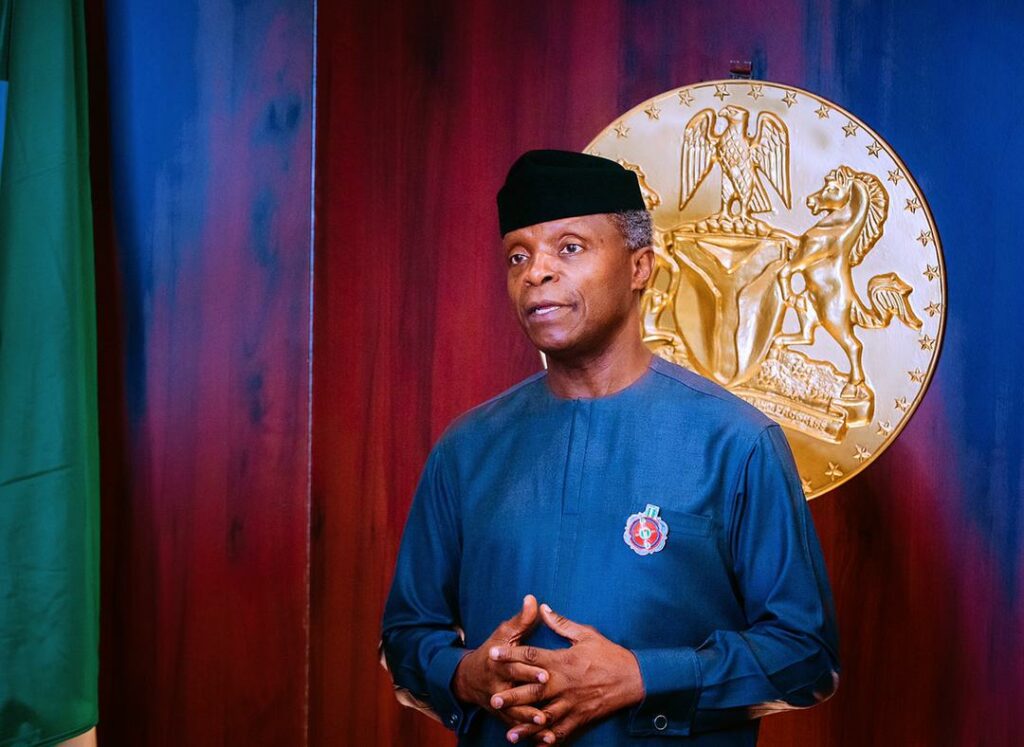
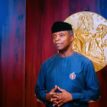
Professor Yemi Osinbajo

VP highlights impact of Sustainability Plan in saving jobs, sustaining livelihood, improving healthcare sector

Calls for global action in access to vaccines for African countries in Chatham House event

Nigeria’s priorities in a post-COVID-19 world include restoring economic growth in the immediate term, building resilience in the health sector, and repositioning the economy on a sustainable footing in the medium term while saving jobs and building domestic capacity and local production in critical areas.

These were the summations of Vice President Yemi Osinbajo, SAN, during a virtual Chatham House interactive session on Tuesday themed: “Priorities for Nigeria’s Post-COVID Recovery.”

During the Chatham House interaction, the Vice President discussed the challenges posed to Nigeria by the global COVID-19 pandemic and the Nigerian government’s response aimed at ensuring lasting socio-economic recovery and development.

Prof Osinbajo highlighted the significant impact of the Buhari administration’s Economic Sustainability Plan (ESP) as a crucial pivot in helping the country respond to the fallouts of the pandemic.

He explained that “the Buhari administration’s first priority was to protect people and their livelihoods in response to the fallout of the pandemic. One of the ways was to support the critical MSMEs sector through the Survival Fund scheme, a component under the ESP.”

According to the VP, “one of the specific interventions under the ESP was what we describe as the Survival Fund, which essentially was a fund to protect jobs and to ensure that during the course of the pandemic and immediately thereafter, informal workers in particular or private sector workers especially those in the informal sector, were at least able to continue to earn some wages.”

Prof. Osinbajo stated that through the Survival Fund scheme, over 300,000 beneficiaries, as well as businesses have been supported during the pandemic “by providing salaries for three months for beneficiaries, which include private school teachers, artisans, road transporters, taxi cab operators, and commercial tricycle operators in the urban areas.

“We also sought to protect the most vulnerable, in particular, the urban poor who were also hard hit. What we did was to provide direct cash transfers to the urban poor, many of them who are captured in a social register. In the first phase of that, we are able to benefit about 1 million beneficiaries, and we are now in a position using the same social register to scale up the programme to about 20 million beneficiaries.”

The Vice President also highlighted the work being done by government in the areas of improving broadband connectivity and expanding the country’s national identity base, which he stated would help in developing the country’s existing social register and other pro-poor programmes under the Buhari administration’s Social Investment schemes.

Also, to stimulate production in the economy, Professor Osinbajo noted that the Federal Government is “focused on energising existing value chain in agriculture, construction and renewable energy,” even as he highlighted the impact of the ESP’s agriculture scheme and social housing programme in improving local productivity and creating jobs.

“Our agriculture programme (under the ESP) aims at expanding productivity, creating a total of about 5 million jobs. What we have done so far is that we’ve been able to register and geotag about 5 million new farmers to farmland areas. The programme is also supporting smallholder farmers by linking them to extension services and low-interest input financing.

“We also have a mass housing programme which is designed to deliver affordable homes through direct intervention in the housing construction sector aimed at creating 1.8 million jobs together with the construction of 300,000 homes in the first phase. At the moment, the programme is ongoing in 12 states which will be expanded to all of the states in the federation.”

The Vice President further explained that the ESP was developed as a short-term strategy to address the two-fold challenge posed by the pandemic: to both public health and the national economy.

For instance, in the health sector, Professor Osinbajo stated that a critical area for government in the fallout of the pandemic “is in doing far more with our research institutions and investing far more in these institutions.”

He said, “since February 2020 (when Nigeria confirmed its first COVID-19 case), we have significantly ramped up our testing and case management capacity. We have activated from about five molecular laboratories to about 120, most of them public laboratories.

“We have expanded the footprint of our sovereign public health response capacity, especially at the sub-national level, and in areas where such capabilities didn’t exist before.

Professor Osinbajo further said government was also focused on promoting a culture of preparedness across all levels of the country’s health care system by building resilience in the health sector.

“Going forward,” he said “we are committed to building on the exemplary dedication of our health workers and strengthening the capacity of our health systems to withstand shocks created by infectious diseases and pandemics such as we are experiencing.

“One reason why we’ve been able to manage this pandemic better than expected is that we did have some existing public sector infrastructure to work with, the Ebola outbreak in 2014, our ongoing battles with Lassa fever, our successes with polio eradication all helped us to tighten our pandemic contingency plans, strengthen our emergency coordination and surveillance capacity and also enhance investments in public health laboratories.”

Osinbajo highlighted the government’s efforts through the Nigeria Centre for Disease Control (NCDC) in tackling the pandemic, adding that it also prioritised the strengthening of the country’s public health infrastructure

“While it is true that in many respects, our hospital infrastructure still lags behind in standards, especially when compared with richer countries of the world, we’ve been able to draw on the resilience and adaptability of our tried and tested community health system,” he noted.

The VP also called for global action in ensuring access to vaccines, especially in poorer countries, noting that, “there are justifiable concerns, in my view, about the certainty of fair and equitable access to vaccines, as well as the likelihood that poorer countries would be left behind if the distribution of these vaccines is determined by the nationalistic sentiments.”

“As part of our recovery efforts, Nigeria has taken delivery of about 4 million doses of the COVID-19 vaccines under the international COVAX scheme and we have commenced vaccination of our people. This year, we will receive 84 million doses of the Oxford AstraZeneca vaccine under that same scheme, which would be enough to vaccinate about 20 per cent of our population.”

According to Osinbajo, “in our globalised environment, national self-interest is insufficient to address the challenge of a global pandemic, Indeed, in a world that is interconnected as ours, any plan other than a global plan is bound to be counter-productive.”

The Vice President further stated that a policy imperative of the Buhari administration is also hinged on encouraging value addition in every sector of the economy, especially to consolidate areas where the country had comparative advantage.

The live event was chaired by a senior official of Chatham House; Dr. Renata Sevan.

Vanguard News Nigeria

The post How Buhari’s administration’s ESP helped Nigeria’s COVID-19 challenges – Osinbajo appeared first on Vanguard News.